 CRATE
CRATE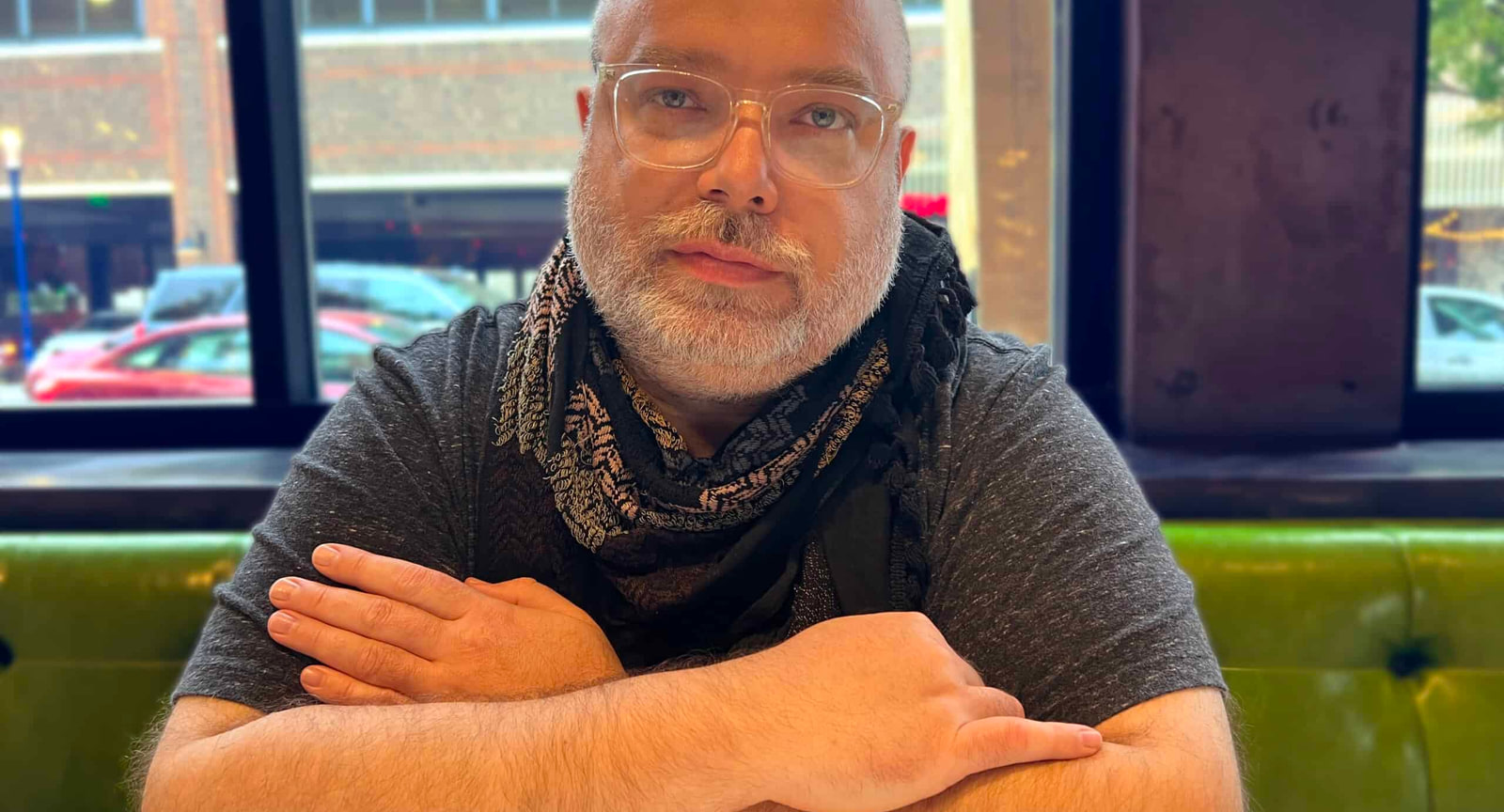
I have handed a record to the world more times than I can count, and I still get nervous at the same moment every time. Not the mix. The send.
My name is Jon Rezin. I mix and master records for a living, and I have been doing it for more than twenty years. It is the only job I have ever wanted. Somewhere in there I won a Grammy, which still feels strange to write down. My work has been on Bad Bunny's Super Bowl, on Burna Boy, on close to four billion streams of other people's best days. I have mixed pop and Latin and K-pop and J-pop and Afrobeats and rock, hundreds and hundreds of released records, for artists on the other side of the planet who I have never met in person. That last part is the whole reason this tool exists.
Because here is what nobody tells you about a career like mine. The music is the easy part. The hard part is that the person who needs the session is almost never in the room with me, and the session is almost always too big to send.
The rooms I actually work in
People picture a mix engineer in one beautiful studio with a big console and a view. Some days, sure. But the truth of a modern career is that I work from wherever the work is. A studio in another city one week. A hotel room the next. A borrowed desk in another country, on a label's Wi-Fi, on a deadline that was already tight before I got on the plane.
And the sessions kept getting bigger. A serious consolidated session today is not a few hundred megabytes. It is five, ten, fifteen gigabytes of audio. Every stem, every take, every vocal comp the artist might want back. Multiply that by a couple of revisions and a couple of collaborators and you are moving more data in a week than some people move in a year.
The mixing, I can do. I have spent two decades learning how to do it. The moving is the part that has cost me sleep.
The send that would not send
I can tell you the exact shape of the bad night, because I have lived it more times than I want to admit.
It is late. The mix is finally right. The artist is awake in a time zone eight hours ahead, waiting, because their release is tomorrow and they cannot hear it until it lands. I drag the session into an upload. The little estimate appears. Nine hours remaining. The Wi-Fi in the building is shared with two hundred other people who are all also awake. The bar flickers. At hour three the upload dies at eighty percent and gives me nothing, no partial file, no resume, just a red X and a blank progress bar and a note to try again.
So I try again.
That is not a rare event in my world. That is a Tuesday. And the version of it that actually scares me is worse than a failed upload, because at least a failed upload tells you it failed. The one that scares me is the one that goes through, looks fine, gets downloaded on the other end, and has a single dropped sample or a click buried in one stem that nobody catches until it is already in the master. A corrupted transfer that lied about being fine. I have chased ghosts like that through a mix at two in the morning, and I never want to do it again.
What "just zip it" never understood
For years the advice was the same. Just zip the session. So I would zip a twelve gigabyte folder and watch it come out at eleven and a half, and sit there wondering what the point was.
The point, I eventually understood, was that zip was never built for us. It looks for repeated patterns in raw bytes, and recorded audio does not have many. To a general compressor, a snare hit looks like noise, and you cannot squeeze noise. It was not my fault the files were huge. The tool in my hand was built for documents, and I was handing it music.
There is a better way, and audio people have known it for a long time. Formats like FLAC do not look at bytes, they model the waveform. They predict where the next sample should be and store only the tiny difference between the guess and the truth. That is how you pull real size out of audio with zero loss, the decoded file identical to the original, sample for sample. I kept thinking, why is there no archive that does this for a whole session. Not one file. The whole messy folder, routed intelligently, each kind of audio to the right lossless codec, the project files packed with the heavy compression where that actually helps.
Nobody had built it. So I built it. That is Crate.
What lossless and verified mean to someone who mixes for a living
I want to be precise about these two words, because they are the entire promise and I refuse to be loose with them.
Lossless means what comes out is bit for bit identical to what went in. Not "sounds the same." Identical. When someone hands me their vocal, that is the most important thing they own, and I am not going to be the reason a single sample of it changes. Crate compresses a typical session about 72 percent smaller and does not alter one bit of the audio.
Verified means I do not ask you to take my word for it. Crate runs a SHA-256 checksum over every file when it packs, and checks every file again when the other person opens it. If one byte is off, you know. On the far end the screen tells you, plainly, that every file arrived bit perfect. That is the feature I am proudest of, because it kills the ghost. No more wondering if the file that looked fine actually was fine. You can see that it was.
Smaller so it actually leaves the building. Verified so you never chase a phantom click through a master again. Those are not marketing lines to me. They are the two problems that cost me the most nights, answered.
Why one time, and not a subscription
I could have made this a subscription. Everyone told me to. Put the files in my cloud, charge every month, hold the masters on my servers.
I said no, and I want to be honest about why. I have watched too many tools like that disappear and take people's work down with them. I did not want to be one more service that your livelihood depends on staying in business. And I did not want to build the thing where the person you are sending to has to sign up and pay before they can even open your work. That is backwards. A transfer tool that charges the receiver is not a transfer tool, it is a toll booth.
So Crate is a tool, not a service. It runs on your machine. It works offline. Your files never have to touch my servers at all. Receiving and unpacking are free, forever, no account. Unlimited packing is twenty five dollars, once, with every feature and every update included. You own it. I would genuinely rather you own the thing than rent it from me for the rest of your career.
There is also a reason that price is a flat twenty five dollars and not more. A lot of the people I built this for are not in Los Angeles. They are producers where mobile data costs real money, where sending ten gigabytes can be a meaningful piece of a month's income. For that person a smaller file is not a convenience, it is the difference between the work moving and not moving. Another monthly charge is exactly the thing that does not happen. A one time price you decide once and never think about again. That felt right for a tool, and wrong for a service, and I wanted to build a tool.
The thing I wish I'd had
I built Crate for the version of me at 2am in a hotel, watching an upload die at eighty percent with an artist awake and waiting on the other side of the world. I built it for the producer for whom the data itself is the wall. I built it for anyone who has ever done the hard, real work of finishing something and then been stopped cold by the boring problem of getting it across a connection that was never built for what we do.
The mixing was always the part I loved. Crate is me finally fixing the part I hated, so that the send is no longer the scariest moment of the night.
Drop a session in and see what it weighs. Your first pack is on me.
Crate is a lossless session compression tool for music and audio, built by a working mix engineer. Pack a session typically 72 percent smaller, verified bit for bit, and send it over whatever you already use. Free to receive, one time twenty five dollars to pack.